
Why great product photography is the artisan’s most persuasive salesperson
Every handmade piece carries the imprint of human intention—minute hammer marks in a cuff, glaze variations on a cup, the satin sheen of vegetable-tanned leather. The challenge for makers is translating that tactile poetry into digital images that spark desire and trust. Exceptional product photography does more than document; it persuades. It shows weight, scale, finish, and function in a way that lets buyers imagine the piece at home or on their body. When a browser can almost feel the grain of the wood or the sparkle of a stone, hesitation shrinks and conversion grows.
For artisans, imagery bears a double burden: it must honor the craft while meeting the technical demands of modern commerce. Clear, consistent photos reduce returns by setting accurate expectations of size and color. They also strengthen brand identity, ensuring the copper bowl on your website, the necklace on your marketplace listing, and the ring in your social feed all look like they belong to the same maker. Consistency across backgrounds, lighting, and angles reinforces the impression of a considered practice—something buyers intuitively value in the world of handmade goods.
Great images help with discovery too. Search algorithms and shoppers reward listings with sharp, well-lit, descriptive photos. While copy captures story, visuals command the stop-scrolling moment. For markets that prize authenticity—local craft fairs, boutique retailers, regional galleries—photography can bridge the gap between tactile inspection and digital browsing. Clear lifestyle images convey scale without a ruler, show fit without a fitting room, and provide context without a showroom. Think a ceramic mug cradled in hands, a pendant shown at collarbone height, a watch against a linen cuff. These touches aren’t fluff; they’re functional cues that answer unspoken questions quickly.
Finally, strong product photography for artisans is a long-term asset. The same image set can feed product pages, line sheets for wholesale, pitch decks for stockists, email banners, postcards for pop-ups, and social reels. Done right, each product becomes a content engine that works 24/7—no studio rent, no travel costs—supporting sales wherever your work is discovered, from neighborhood boutiques to global marketplaces.
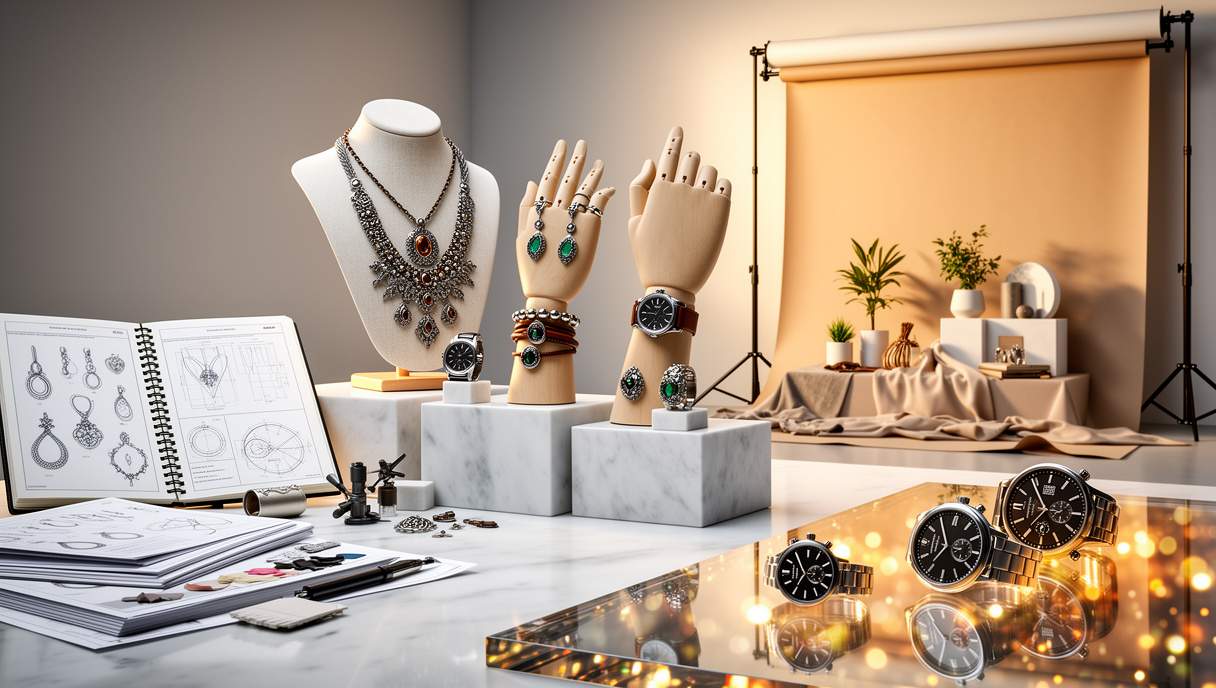
Building a lightweight studio workflow: lighting, styling, and shots that honor craft
Artisan photography doesn’t require a warehouse studio. It thrives on a repeatable, compact setup that respects materials and finish. Start with light: soft, directional illumination is the fastest route to premium results. Window light from the side, diffused through sheer fabric or tracing paper, creates gentle gradients that reveal surface without harsh specular hotspots. A simple white foam board opposite the light bounces fill back into shadows. For reflective items like jewelry and watches, larger diffusers and curved reflectors smooth out unwanted reflections and contour metal surfaces with elegant “wrap.”
Color fidelity matters. Use a gray card for white balance and calibrate your screen when possible. Metals, glazes, and textiles can shift unpleasantly if shot under mixed lighting; keep it consistent. Backgrounds should fit the brand and never compete: a seamless white or light gray for clean packshots, a subtle texture like linen or reclaimed wood for lifestyle—chosen in service of the product’s story. When in doubt, simplify. Negative space carries luxury energy and lets buyers focus on craftsmanship.
Make a shot list before you begin. Essential angles often include: a hero (three-quarter) angle, straight-on front, top-down for flat pieces, side profile to show thickness, macro detail of texture or setting, back/closure or maker’s mark, in-hand or on-body for scale, and packaging for a complete brand impression. Wearables deserve on-model or at least mannequin shots to demonstrate drape, fit, and proportion. For jewelry and watches, consider a clean “on-wrist” or “at neckline” image; for bags and leather goods, show interior compartments and how the piece sits when carried.
Props should be purposeful, never random. Use materials that harmonize with your craft—stones for lapidary work, a block of maple for woodturning, a strip of rawhide for leather. Keep them minimal and repeatable to maintain a consistent series feel. A few styling rules pay dividends: keep horizons straight, avoid dust and lint (a rocket blower is your friend), handle fingerprints early, and maintain a steady camera height across SKUs to support uniformity.
Modern smartphones with manual controls or a mirrorless camera and a 50–90mm equivalent lens are more than sufficient. Prioritize stability with a tripod and shoot tethered or with a timer to eliminate shake. Capture in RAW when possible for latitude in post. Retouch lightly to preserve authenticity: correct dust, manage reflections, balance exposure, and match tones across a collection. Export variations for platforms—high-resolution 2K or 4K masters for print and hero imagery, web-optimized JPEGs for stores, square or 4:5 crops for social, and transparent PNGs for overlays or catalogs. A repeatable file-naming convention and folder structure keeps growth manageable as your line expands.
Scaling visual production without losing soul: modern tools for small studios
The artisan’s dilemma has always been time: making takes precedence, but marketing needs a steady stream of imagery—packshots for the shop, lifestyle scenes for launches, and seasonal content that keeps feeds fresh. A smart approach blends traditional capture with modern, maker-friendly tools to accelerate output without diluting the handmade character. Start by systematizing what never changes: lighting placement, camera height, background sets, and a core shot list per product type. This template-based approach preserves identity while making new releases faster and more consistent.
Then, layer in digital production to multiply possibilities. AI-assisted studios now transform sketches, CAD files, and base product shots into polished visuals that look like they came from a full team. For a jeweler, that might mean generating on-model images with different skin tones and lighting aesthetics from a single master photo. For a ceramicist, it can create colorway explorations and styled environments without hauling props or renting spaces. For a watchmaker, early renders based on CAD allow pre-launch campaigns before the first physical prototype ships.
These platforms thrive on realism: metal reflections that respect physics, gemstones with credible dispersion, fabric drape that feels natural, and texture mapping that honors surface detail. The benefit is twofold. First, speed—new collections can be photographed, styled, and published in days rather than weeks. Second, scale—core images can be adapted to fit marketplace specs, wholesale line sheets, and social formats at 2K or 4K quality without reshoots. Iteration becomes affordable: try a darker marble surface, switch from daylight to warm evening tones, add hands-in-frame for human warmth, test seasonal palettes, and deploy the winners across channels.
Real-world scenarios show the range. A silversmith prepping a craft fair can build a cohesive wall of packshots, then spin out lifestyle scenes for postcards and banners—all anchored by the same hero angles. A leatherworker launching a limited run can test multiple backgrounds and on-body crops to pinpoint the angle that best shows pocket depth or strap drape. A boutique watch brand can maintain visual consistency across a growing SKU list, swapping dial colors and strap materials without rebuilding the entire set. For makers selling locally and shipping globally, this hybrid workflow ensures every buyer sees the piece clearly, whether browsing on a phone in the market queue or comparing finishes on a desktop at home.
When evaluating tools, prioritize those designed for high-end products: precise control over lighting and reflections, drag-and-drop scene building, and outputs that hold up in print as well as online. Favor workflows that respect your brand’s nuances—matte versus gloss, patina versus polish, the warmth of brass versus the cool of stainless steel. One streamlined option that supports this scale and subtlety is built specifically around Product photography for artisans, enabling makers to move from concept to launch-ready visuals with fewer bottlenecks and more creative freedom. The result is a library of images that feels as carefully made as the products themselves—consistent, versatile, and unmistakably yours.

From Reykjavík but often found dog-sledding in Yukon or live-tweeting climate summits, Ingrid is an environmental lawyer who fell in love with blogging during a sabbatical. Expect witty dissections of policy, reviews of sci-fi novels, and vegan-friendly campfire recipes.